
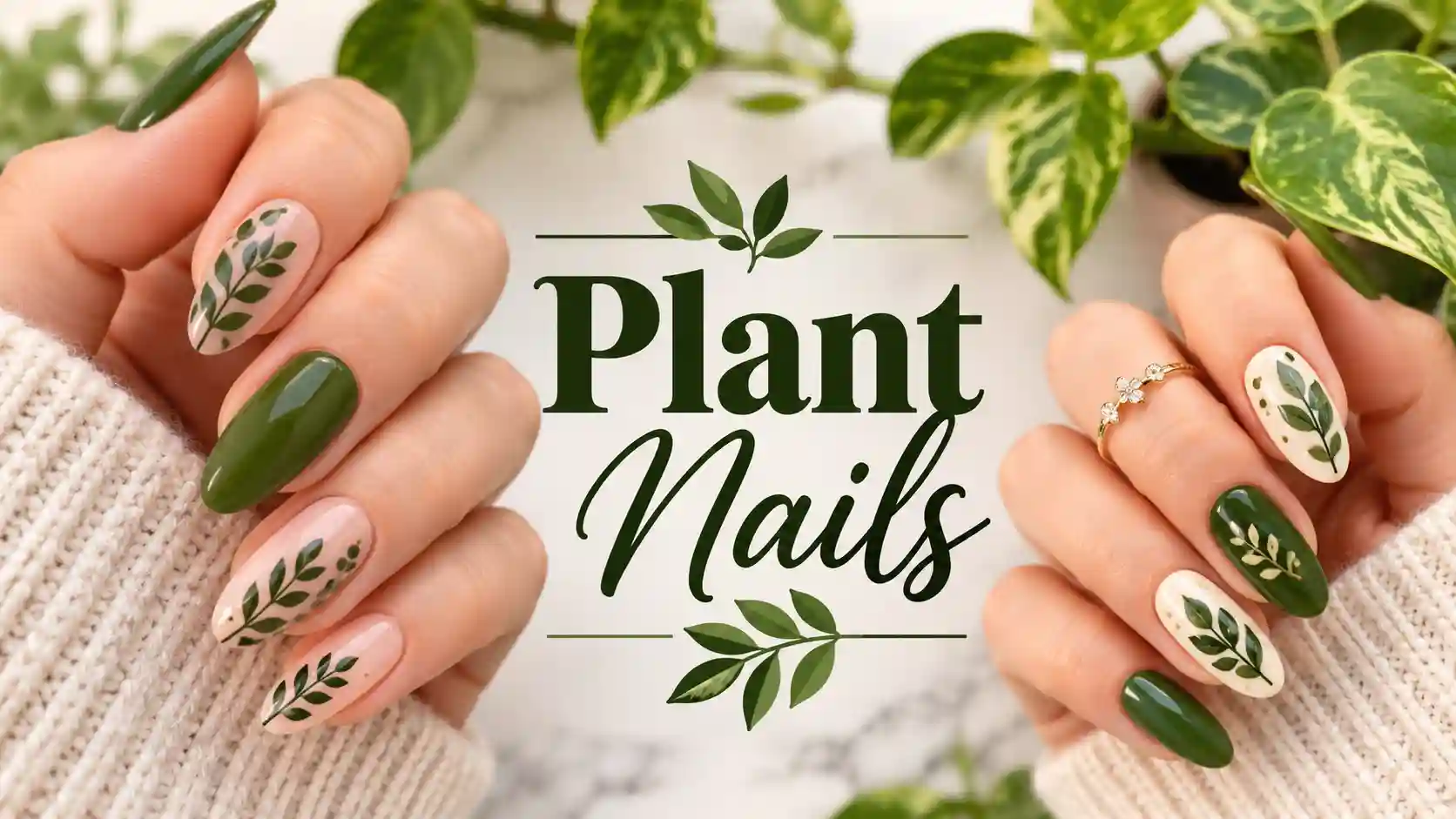
Plant Nails: 25 Botanical Nail Ideas, Real-Plant Manicures and Plant-Based Polish
If you have ever stared at your windowsill jungle and thought, “I wish my hands looked this good,” you are exactly who plant nails are made for. Plant nails are one of those rare beauty trends that feel calm instead of loud. They borrow the shapes, colours and textures of the plant world, then shrink them down to the size of a thumbnail.
But here is the thing: when people search for plant nails, they do not all want the same thing. Some want leafy nail art to show their nail tech. Some are curious about the viral manicures made with real baby succulents. Some are shopping for plant-based nail polish because they want a gentler formula. And a few are gardeners who just want healthier nails after a season in the soil.
This guide covers all of it, in plain language. You will find 25 botanical design ideas, colour palettes, shape advice, step-by-step DIY instructions, an honest look at real-plant manicures, a practical breakdown of plant-based polish, and nail-care habits that actually help. At the end, you will find ten FAQs that answer the questions people ask most.
Also Read : Lilac Ombre Nails: 20 Gorgeous Ideas, an Easy Tutorial and Pro Tips for 2026
Quick Answer: What Are Plant Nails?
Plant nails are manicures inspired by plants, or made with plant-derived or real plant materials. The phrase usually means one of four things:
- Plant nail art: painted, stamped or sculpted designs of leaves, ferns, monstera, succulents, flowers, vines and trees.
- Real-plant nails: tiny living or dried plants, pressed flowers and leaves set into or onto the nail.
- Plant-based nails: polish, press-ons or care products made with a high percentage of plant-derived ingredients.
- Healthy nails for plant lovers: care habits that keep your nails strong when you garden or handle soil often.
Most readers land on this topic for the first meaning, so that is where we spend the most time. We cover the other three too, because they are the ones most articles skip.
Why Plant Nails Keep Growing in Popularity
Plant-themed everything has been building for years: houseplants in every corner, botanical prints on bedding, leaf-shaped jewellery, even cactus socks. Nails were always going to join the party. A manicure is the smallest canvas you wear every day, so it is an easy place to show what you love.
There are a few real reasons the look sticks around instead of fading like a one-season fad.
It is flexible. Plant nails can be minimal (a single painted stem on a nude base) or maximalist (3D sculpted tropical flowers on every finger). Both count.
It suits every season. Fresh green leaves in spring, bold tropical foliage in summer, rust-coloured maple leaves in autumn, and evergreen sprigs in winter. You never run out of reasons to book a new set.
It works on every nail shape and length. Short, square, almond, coffin, round: botanical designs adapt because plants come in every proportion.
It feels grounding. Lots of people simply find green and earthy shades relaxing. When you look down at your keyboard or phone, you get a small dose of calm.
It is easy to personalise. You can pick the exact plant you own, love or want. Snake plant stripes, a pothos vine, a prickly cactus: your nails can say something about you without a word.
How to Choose Your Plant Nails Style (Before You Book or Buy)
Before you save fifty photos and overwhelm your nail technician, answer three quick questions.
1. How much detail do you want? If you want something quiet, choose one accent nail with a single leaf. If you want drama, ask for full-hand foliage with a hand-painted gradient background.
2. How long do you need it to last? Painted gel designs and press-ons last longest. Natural-polish designs and anything with real plant material do not last as long. We cover the trade-offs in the real-plant section below.
3. What is your daily routine? Typing all day, washing dishes, gardening or lifting weights all put stress on nails. Shorter lengths and a strong top coat suit hands-on lifestyles. Long almond or coffin shapes with 3D flowers suit people who are gentler on their hands.
Once you know your answers, the ideas below get a lot easier to narrow down.
25 Plant Nails Ideas You Can Try Right Now
We grouped these by style so you can jump to the look that fits you.
Leafy and Foliage Plant Nails
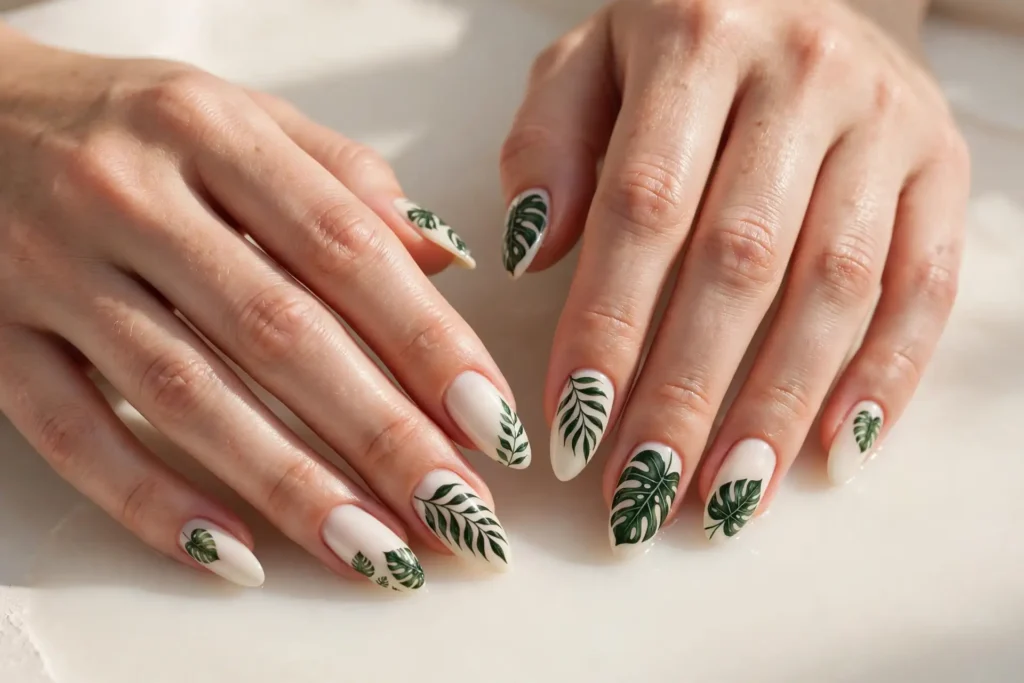
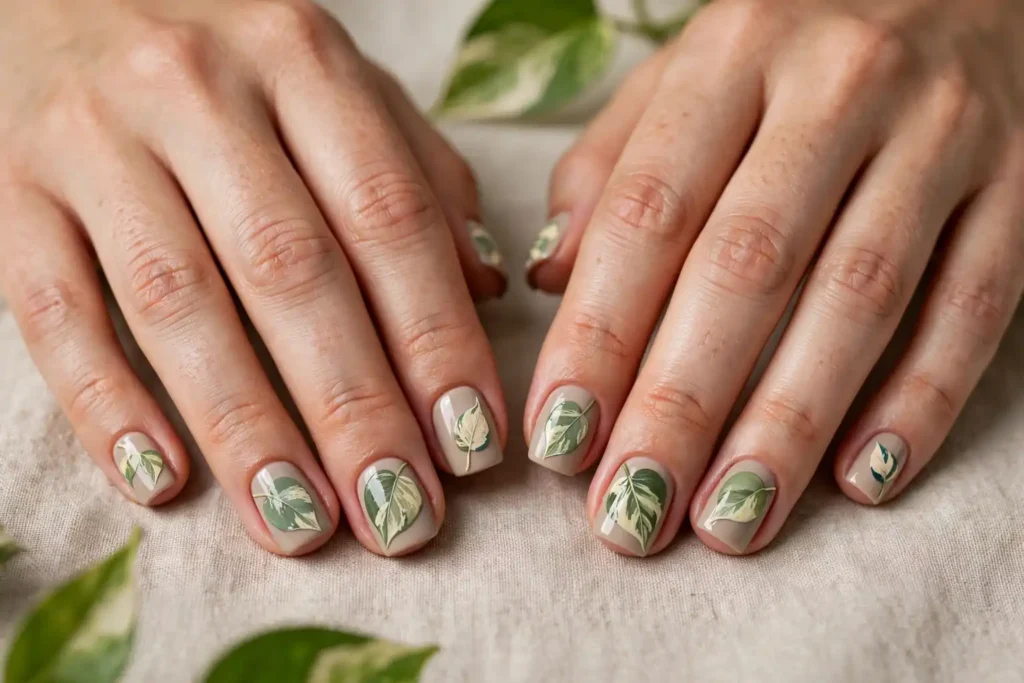
1. Monstera leaf nails. The split, glossy leaf of a monstera is the poster child of plant nails. Paint a deep emerald leaf on a milky white or pale green base, then add a thin line of gold foil for the midrib. It looks striking on almond nails and equally good on short squares.
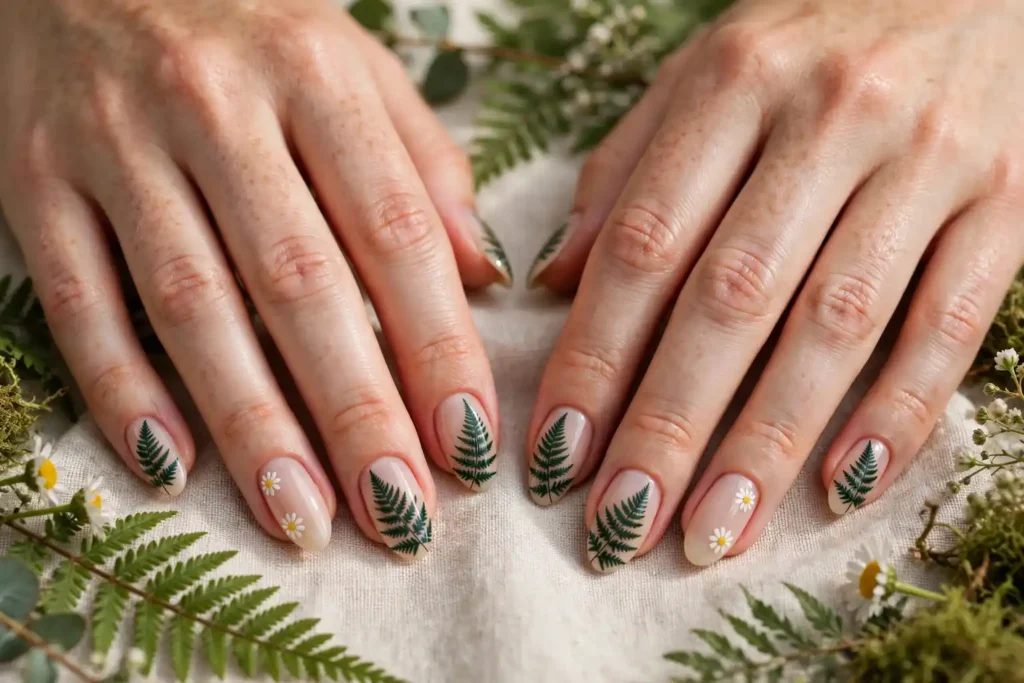
2. Fern frond nails. Ferns are all about delicate repetition. Use a fine liner brush to draw a curved stem, then add tiny paired leaflets along both sides. A forest green fern on a sheer nude base feels soft and sophisticated.
3. Pothos vine nails. A trailing vine is one of the easiest freehand designs. Start at the cuticle or the free edge and let a thin green line wander up the nail, adding heart-shaped leaves as you go. Because the vine is asymmetric, small wobbles look natural instead of wrong.
4. Snake plant stripe nails. Snake plant leaves have bold horizontal banding in two or three shades of green. Replicate that with a gradient or striping brush. It is a great pick if you prefer graphic over floral.
5. Fiddle leaf fig nails. Draw one large, veined leaf per accent nail in a muted olive tone. Using a matte top coat on the leaf and glossy on the background gives a subtle texture contrast that photographs beautifully.
6. Tropical palm nails. Think banana leaf and palm shadows. Deep green leaves overlapping on a bright coral or mango base feel like a holiday. These are popular for summer trips and
beach weddings.
Succulent, Cactus and Desert Plant Nails
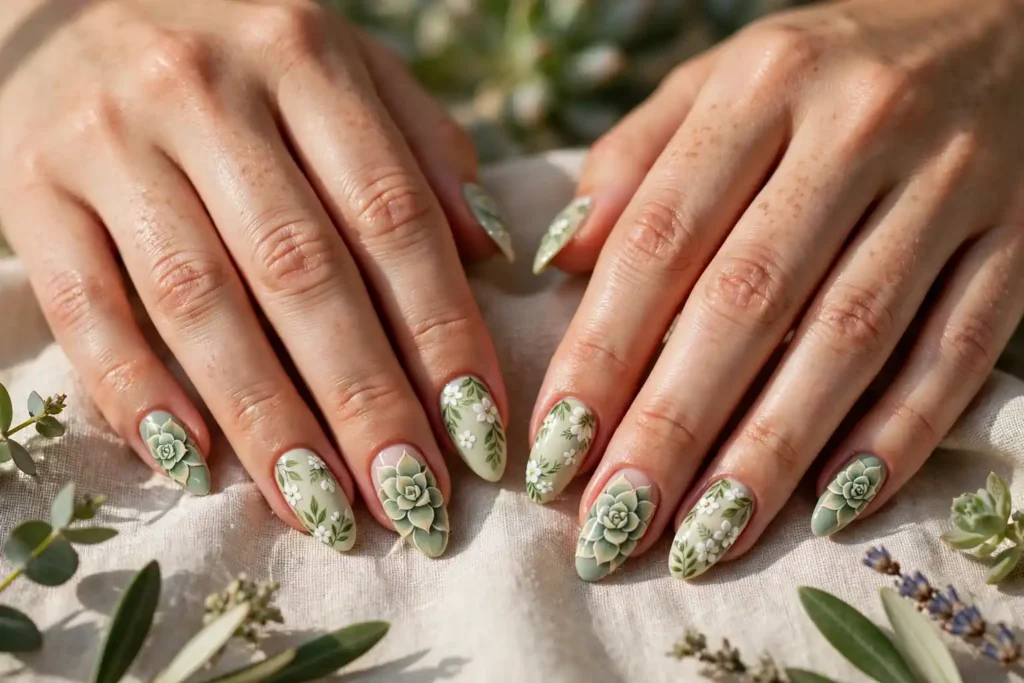
7. Painted succulent nails. Rosette-shaped succulents like echeveria are perfect for nail art because each petal is a simple curved teardrop. Layer petals from the inside out in two or three shades of dusty green and blush.
8. Cactus accent nails. A simple saguaro on one nail and tiny dotted spines on another is playful and easy. Pair it with a terracotta or sand-coloured base for a desert-sunset feel.
9. Prickly pear and bloom nails. Add a bright pink or orange flower on top of a paddle-shaped cactus pad. The pop of colour keeps a green design from feeling flat.
10. Aloe vera nails. Aloe is spiky, soft and symmetrical. A cluster of pointed leaves with a pale highlight along each edge makes a calming, spa-inspired manicure.
11. Carnivorous plant nails. Venus flytraps and pitcher plants bring a bit of edge. Think red-lined mouths and sharp little teeth on a dark green base. It is a good choice if you want plant nails that do not look sweet.
Must Read : Summer Flower Nail Designs That Will Bloom Beautifully On Your Hands All Season Long
Floral and Blossom Plant Nails
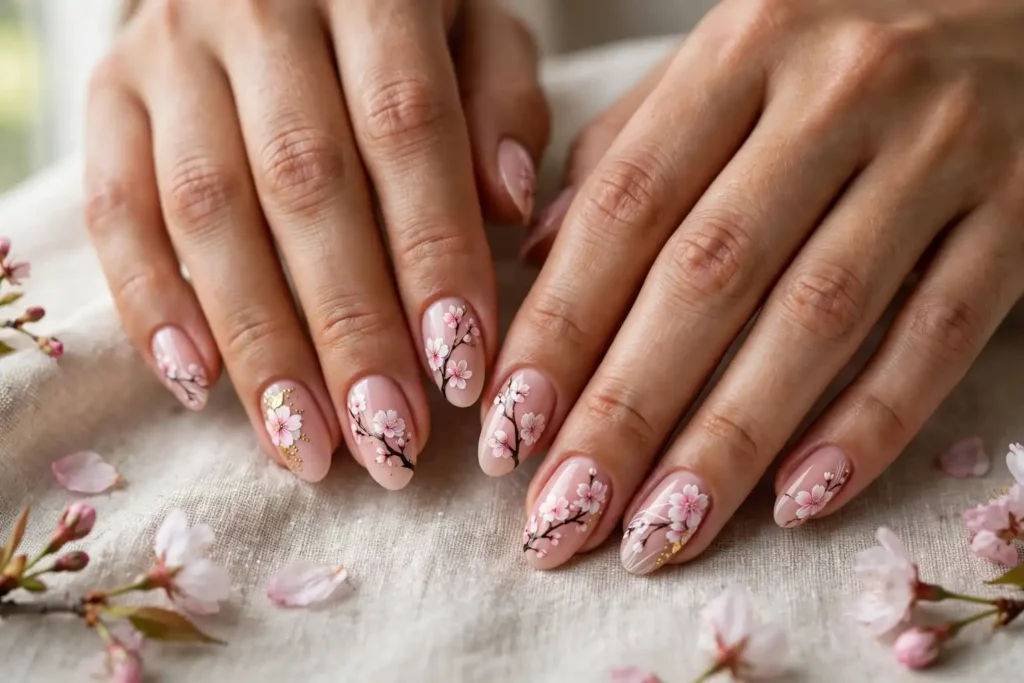
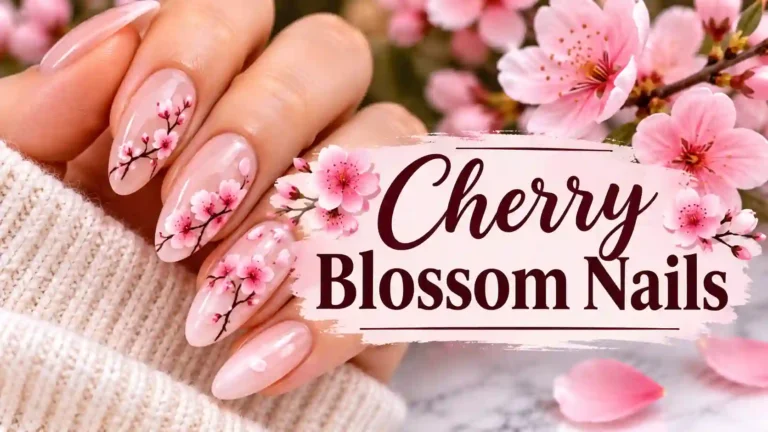
12. Cherry blossom nails. Five-petal pink blooms scattered on a sheer pink or milky base, with thin brown branches, are a spring classic. A single dot of gold in the centre of each flower adds polish.
13. Daisy nails. White petals with a yellow centre, repeated across a pale green or baby blue base, are cheerful and beginner-friendly. A dotting tool makes the petals quick to place.
14. Lavender sprig nails. Short curved stems with tiny purple buds look stylish on a soft grey or cream base. This is one of the most flattering designs for people who want a muted, grown-up palette.
15. Wildflower meadow nails. Mix small flowers in different colours with thin grass blades
growing up from the cuticle. The messy, natural arrangement is part of the charm.
Textured, Artistic and Statement Plant Nails
16. 3D sculpted tropical flowers. Hibiscus, orchids and bird of paradise built from sculpted acrylic or hard gel bring real dimension. This is a labour of love for the nail technician, so book extra time and expect a higher price. Keep the other fingers simple so the flowers can breathe.
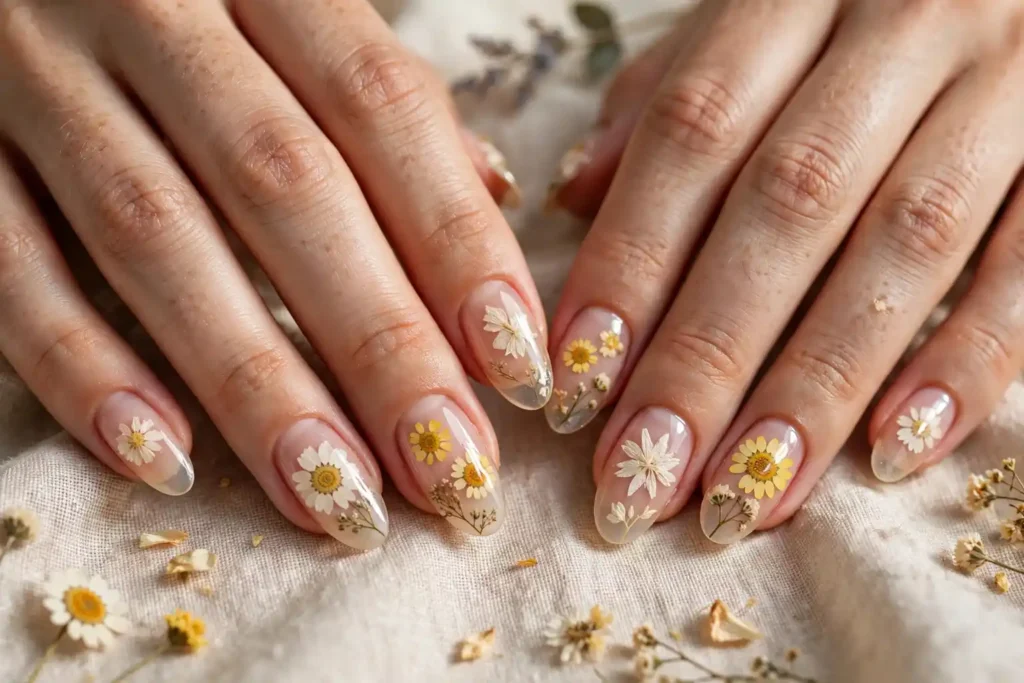
17. Pressed dried flower nails. Tiny pressed flowers and leaves are sealed under gel or builder gel for a delicate, almost museum-like look. Baby’s breath, forget-me-nots and fern fragments are favourites because they dry flat and stay colourful.
18. Terrarium nails. Think of the nail as a tiny glass jar. Encapsulate bits of moss, miniature leaves, seeds and stems in clear gel so the inside looks like a mini ecosystem. They are one-of-a-kind and a real conversation starter.
19. Fruit and citrus plant nails. Lemon wedges, strawberries, cherries and avocado halves count as plant nails too, since they come from plants. Bright, juicy colours suit summer and look fantastic on short nails.
20. Tree and forest nails. Pine silhouettes, birch trunks with dark bark lines and misty gradient skies create a moody woodland scene. Cool greens, greys and a touch of white shimmer work especially well in winter.
21. Watercolour botanical nails. Soft washes of colour blended with a damp brush make petals and leaves look like a painting. Use sheer polish or gel inks over a clear or milky base for a dreamy effect.
22. Geometric botanical nails. Combine crisp lines, triangles or half-moons with simple leaf shapes. The contrast between sharp geometry and organic curves feels modern and a little architectural.
23. Stamped plant nails. Nail stamping plates are the secret to precise, repeatable botanical patterns without freehand skill. Plates built around houseplant themes (calatheas, anthuriums, begonias and similar tropical foliage) let you stamp an entire jungle in minutes.
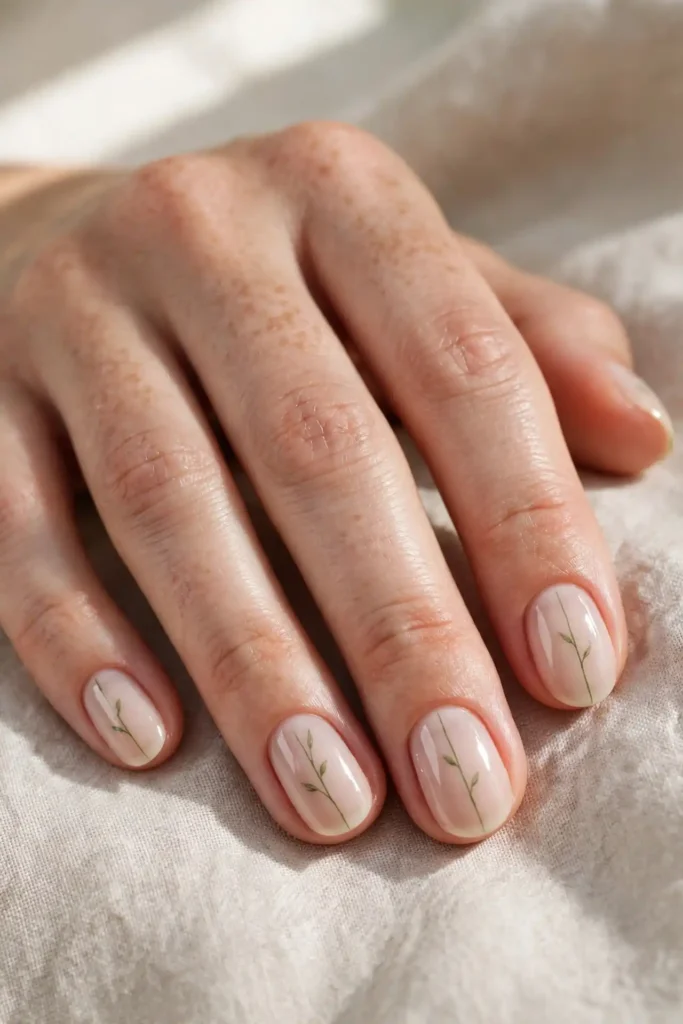
24. Minimalist single-stem nails. One thin stem with two leaves on a nude or sheer base is hard to beat for work-friendly elegance. It reads as polished from a distance and detailed up close.
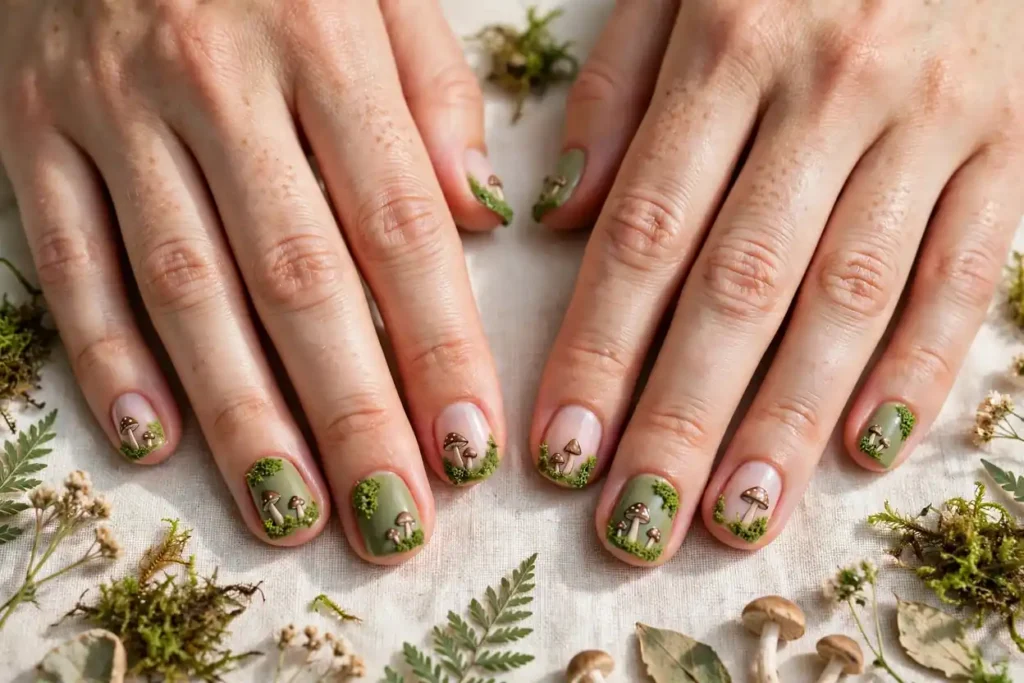
25. Moss and mushroom cottagecore nails. Mossy greens, speckled browns and tiny toadstools give a storybook, forest-floor feel. Mushrooms are technically fungi rather than plants,
but they sit happily inside the plant nails aesthetic.
Plant Nails Colour Palettes That Always Work
Colour does a lot of the talking in botanical nails. These palettes are easy to mix and match.
Fresh spring: pistachio, soft pink, butter yellow and milky white. Great for blossoms, daisies and new-leaf designs.
Deep jungle: emerald, bottle green, forest green and black-green with gold foil accents. Ideal for monstera, palm and fern looks.
Desert garden: sage, terracotta, sand, dusty rose and a touch of coral. Perfect for cactus, succulent and aloe nails.
Autumn leaf: rust, mustard, olive, burgundy and warm brown. Use for maple, oak and falling-leaf designs.
Winter evergreen: pine, silver, ice blue and snow white. Works for pine branch and frosty forest nails.
Soft neutral botanicals: sheer beige, cream, muted olive and a hint of blush. A good choice for conservative workplaces or anyone who likes quiet colour.
A useful rule: pick one dominant colour (about 60 percent of the look), one supporting colour (30 percent) and one accent (10 percent). That balance keeps plant nails looking planned instead of busy.
Also Read: 45 Exotic Nail Ideas That Turn Your Fingertips Into a Holiday
Best Plant Nail Designs by Nail Shape and Length
The canvas changes what looks best, so match the design to the shape.
Short nails: Choose single-stem designs, small daisies, simple leaf accents and negative-space ferns. Avoid crowding too many details into a small area.
Medium square or squoval nails: These are great for pothos vines, snake plant stripes and geometric botanical combinations because the flat edge supports straight lines.
Almond nails: The tapered shape flatters long, curving leaves like monstera, palm and fern fronds. Let the design follow the natural curve toward the tip.
Coffin and ballerina nails: The wide, flat tip is perfect for cherry blossom branches, lavender sprigs and 3D flowers. There is plenty of room for storytelling.
Round or oval nails: Soft shapes suit watercolour botanicals, daisies and rosette succulents. The rounded outline echoes the shapes of petals and leaves.
If you are unsure, take a photo of your favourite design and ask your nail technician how to adapt it to your nail bed. A good tech will resize the pattern so it flatters your fingers rather than copying it exactly.
Also Read: Business Nail Ideas: 25 Polished, Professional Designs for Work, Interviews and Meetings
Plant Nails for Every Season and Occasion
Plant nails are easy to adapt, which is part of their appeal.
Spring: cherry blossoms, tulips, daisies and light green sprouts.
Summer: palm leaves, hibiscus, citrus slices and bright tropical foliage.
Autumn: maple leaves, acorns, dried-grass tones and warm earthy gradients.
Winter: pine needles, holly, poinsettia petals and frosted branches.
Weddings: fine-line eucalyptus, baby’s breath and tiny white blooms on a sheer base. They match bouquets beautifully.
Work and interviews: single-stem designs, nude-and-sage palettes and matte finishes.
Festivals and holidays: bold tropicals, 3D flowers, neon foliage and chrome-dusted leaves.
Gifts for plant lovers: pair a nail appointment voucher with a small potted plant. It is a thoughtful present for a friend who talks about her pothos like it is a pet.
Also Read: Western Nail Ideas: 75+ Cowgirl-Inspired Designs, Colors and Tips for Every Style
How to Do Plant Nails at Home: Step-by-Step
You do not need to be an artist. Three methods cover almost every skill level.
What You Need
- Nail file and buffer
- Cuticle pusher and cuticle oil
- Base coat and top coat (gel or regular, depending on your system)
- Two or three green polishes in different shades
- One neutral or sheer base colour
- A fine liner brush (size 0 or 00) and a dotting tool
- A stamping plate, stamper and scraper (optional)
- Nail decals or water slides (optional)
- Lint-free wipes and rubbing alcohol or nail cleanser
- An LED or UV lamp if you are using gel polish
Method 1: Freehand Leaf Nails
- Prep. Push back cuticles gently, shape and lightly buff the nail surface, then wipe with cleanser so polish grips well.
- Base coat and colour. Apply a thin base coat, then two thin coats of your background colour. Cure or dry fully between layers.
- Paint the stem. Dip your liner brush in green polish and draw one thin curved line from the cuticle toward the tip.
- Add leaves. Press the brush down gently at the stem, pull outward and lift. That single motion creates a clean leaf shape. Repeat on both sides.
- Add details. Use a lighter green for a highlight on one side of each leaf, or a thin gold line for veins.
- Seal. Cap the free edge and finish with a glossy or matte top coat.
Method 2: Stamped Plant Nails
- Complete steps 1 and 2 above and make sure the base colour is completely dry.
- Apply stamping polish to your chosen plate pattern and scrape off the excess immediately.
- Roll the stamper over the pattern and press it onto the nail with a gentle rocking motion.
- Let it dry for a moment, then top-coat. Stamping works best with thick, pigmented polish designed for the job.
Method 3: Decals and Water Slides
- Apply your base colour and let it set.
- Cut the decal close to the artwork, soak or peel as directed and position it with tweezers.
- Smooth out bubbles, then seal with two thin top coats so the edges do not lift.
Pro tips for cleaner results: work with thin layers, clean your brush after every few strokes, and keep a small cotton swab dipped in acetone nearby to tidy any mistakes before you cure.
Also Read: Cherry Blossom Nails: 25+ Soft, Pretty Ideas for Spring (and Any Other Time of Year)
Real Plant Nails: Do Living and Dried Plant Manicures Actually Work?
This is where plant nails get literal. A few nail artists have gone viral for manicures featuring baby succulents, tiny leaves and fully bloomed flowers. They look incredible in photos, so it is fair to ask how practical they are.
Succulent nails. In widely shared tutorials, small succulents are trimmed and attached to the nail with a floral or plant-safe adhesive. Commentary around the trend has pointed out the obvious drawback: once cut, the plant is not in ideal growing conditions, and nobody can say how long it will last on a nail. One creator’s approach is to use a plant-friendly floral adhesive so that, once the glue weakens, the succulent can be planted in soil instead of thrown away.
What this means in real life.
- Living plant nails are best treated as a photo-shoot or one-day novelty, not an everyday manicure.
- They need gentle handling. Washing hands, opening doors and typing all become small obstacles.
- If you love the look but not the waste, faux succulents or pressed dried plant material give you a similar effect without harming a living plant.
- Never glue anything to your nails that is not meant for use near skin. Choose products made for nail or floral use, and stop immediately if you notice irritation.
The better alternative. Ask your nail technician for encapsulated dried flowers, tiny preserved moss or sculpted 3D succulents. They keep the “grown on my hand” effect while lasting as long
as a regular gel manicure when properly sealed.
Plant-Based Nail Polish and Press-Ons: What You Should Know
Sometimes plant nails does not mean the design at all. It means the product. Over the last few years, more brands have launched polish and press-on nails described as plant-based, bio-sourced or made with natural ingredients.
Examples from the current market include polish ranges that advertise a high percentage of plant-derived ingredients (one popular label claims 83 percent), lacquer collections marketed as plant-based, bio-sourced and chip-free, and sustainable press-on nails marketed as plant-based yet durable, with wear time advertised at up to two weeks. Some polish formulas also add ingredients such as orange extract to support the look of nail strength.
What these claims can and cannot tell you.
- Plant-based is a marketing description, not a guarantee of safety. There is no single universal standard for the term, so check the ingredient list instead of trusting the label alone.
- Plant-derived does not always mean gentler on every person. Natural ingredients can still trigger sensitivities. Patch test if you have reactive skin.
- Wear time varies. Plant-based polish may wear differently from salon gel, so use a good base and top coat and cap the free edge.
- Look for transparency. Brands that list their ingredients clearly and explain what the percentage covers are easier to trust.
- Remember the whole routine. A plant-based polish does not replace healthy nail habits like moisturising and protecting your hands.
If sustainability matters to you, also consider packaging, refill options and how the brand tests its products. A conscious choice is usually a mix of small decisions, not one buzzword.
Healthy Nails for Plant Lovers and Gardeners
A lot of people who love plants spend a lot of time with their hands in the soil. That is wonderful for the mind and tough on nails. Soil gets under the free edge, water exposure softens the nail plate and thorny stems nick the skin around it. Here is how to protect your hands without giving up gardening.
Wear gloves. Cotton-lined or nitrile gloves keep soil, fertiliser and water off your hands. If you do not like gloves, scrape your nails across a bar of soap before gardening. The soap fills the space under the nail and keeps dirt out.
Moisturise daily. Cuticle oil and a rich hand cream replace moisture lost to water and soil. Apply them at night and massage the cuticle area.
Keep nails short and filed. Shorter nails are less likely to snag on roots, pots and stakes. Smooth the edges with a fine file so they do not tear.
Do not use nails as tools. Prying open bags of potting mix or scraping stuck roots is a fast route to breaks and splits. Keep a small trowel or hand fork nearby.
Treat dryness early. If your nails peel or crack constantly, reduce long soaks, use a gentle cleanser and apply a nourishing treatment. If you notice sudden changes in colour, shape or thickness, or persistent pain, see a doctor or dermatologist, because nail changes can sometimes signal other health issues.
Pick protective manicures. Gel or builder gel with a strong top coat can give nails extra protection while you garden. Just make sure it is applied and removed correctly.
Other Things People Mean by “Plant Nails” (Garden Edition)
Because the phrase is ambiguous, you may also see results about actual nails used in gardening. They are a different topic, but a quick explanation saves you a click.
Rusty nails in houseplant soil. A popular home hack suggests pushing several rusty nails into a pot, claiming that the iron oxide helps struggling plants that look pale or yellow. It is a natural process, and some gardeners swear by it. However, it works best, if at all, for small container plants, and results are not guaranteed. A pale plant may simply need better light, watering or fertiliser. Rusty metal can also cause injuries, so handle it carefully, keep it away from children and pets, and stop if the plant looks worse.
Copper nails and trees. Some copper nail products are sold to control or stop regrowth in unwanted trees, usually by driving them near the root. That is the opposite of helping a plant, so check local rules and use professional advice before trying it.
Mulch and fabric nails. Polypropylene pegs and nails are used in landscaping to hold mulch felt, weed fabric and deterrent sleeves in place.
If you landed here looking for beauty content, you can skip this section. If you are a gardener, treat these tips as starting points, not guaranteed fixes.
Common Plant Nail Mistakes (and Simple Fixes)
Too many details on too many nails. Pick one or two accent nails and keep the others simple.
Thick polish layers. Thick coats bubble and smudge. Use thin layers and cure or dry between them.
Using the wrong green. Neon green on a cool-toned base can look harsh. Test swatches on a nail tip first.
Skipping the top coat. Even beautiful hand-painted work chips fast without a good seal. Cap the free edge every time.
Ignoring skin tone. Warm olive and mustard greens flatter many warm and deep skin tones, while cooler emerald and mint can look lovely on cool and fair tones. When in doubt, hold the bottle against your hand.
Copying a photo exactly. Lengths, nail beds and cuticle lines differ. Let your artist adjust the design.
How to Talk to Your Nail Technician About Plant Nails
A clear request saves time and disappointment.
- Bring two or three photos and explain what you like about each one (colour, shape, detail level).
- Name your plant if you want something specific, such as monstera or snake plant.
- Share your budget and time. Hand-painted and 3D designs cost more and take longer.
- Mention your lifestyle. If you garden or type all day, ask for a durable finish.
- Ask about removal and aftercare. Good salons will tell you how to care for the design and when to come back.
Final Thoughts: Grow Your Own Look
Plant nails are more than a passing trend. They are a flexible, personal and surprisingly practical way to bring a bit of green into your day. You can keep it minimal with a single leaf, go bold with 3D tropical blooms, experiment with plant-based polish, or simply look after your nails better after a weekend of repotting.
Start small. Choose one design from this list, pick a palette you love and give it a go, either in the salon chair or at your own desk. Like any plant, a good manicure rewards patience, care and a bit of sunshine.
Also Read: Whimsy Nail Designs: 40 Playful Ideas, Colors and How-To Tips
People Also Ask
What are plant nails?
Plant nails are manicures inspired by plants. They use leaves, flowers, succulents and other botanical shapes, either painted by hand, created with stamps, or made with dried or pressed plants sealed into gel.
Are real plant nails safe to wear?
Plants set in clear gel or builder gel (like dried flowers) are generally a nail technician’s standard technique. Living plants glued directly to a nail are not a durable way to wear plants on nails, and they can trap moisture under the nail, so they are best left for photos or display.
How long do plant nail designs last?
Painted gel designs usually last as long as a regular gel manicure. Pressed dried flowers in gel usually last the same length of time as gel. Fresh, glued leaves will not last long and may fall off easily.
What are the easiest plant nail designs for beginners?
Single-stem leaves, daisies and small succulent designs are a good starting point. They use simple shapes, few colours and can be done on one or two accent nails.
Which colours work best for plant nails?
Greens (sage, olive, emerald, forest), nude, beige, peach and soft pinks work well. Gold and white can make a leaf design look more elegant.
Is plant-based nail polish better for my nails?
It can be a good choice for people who want products with more plant-derived ingredients, but it is not automatically safer or longer-lasting. Read the ingredient list, patch test if your skin is sensitive and look for brands that explain what their claims mean.
Can I do plant nails on short nails?
Yes. Short nails work well with minimalist, single-stem or small accent designs. Keep the detail small so it does not look crowded.
What tools do I need for plant nails at home?
A fine liner brush, dotting tool, stamping plate, small brush, builder gel, a good top coat and (for pressed flower designs) dried flowers and clear gel are helpful.
Can gardening damage my nails?
It can. Soil, water and plant chemicals can dry your nails and hands. Gloves, regular hand washing and cuticle oil can help keep your nails healthy.
Do rusty nails really help houseplants?
Some gardeners use rusty nails in pots because iron oxide may help plants that need an iron boost, but results are not guaranteed and a pale plant may have other problems such as poor light or watering issues. Handle rusty metal carefully and check plant health regularly.





2 Comments